30 Jun 2026
True Health Partners with Conciurgent Care
 Osvaldo Nuñez

3 Feb 2026
Osvaldo Nuñez
The New USDA Food Pyramid and What It Means for Your Diet
After 15 years on hiatus, the food pyramid is back at the top of dietary guidance in the United States. It has a fresh look, updated advice, and no shortage of controversy around some of the changes.
At True Health, nutrition is a key part of how we help you optimize your health and wellbeing, so we wanted to take a closer look. In this two-part article, we’ll break down the latest version of the pyramid and examine the science behind the updates.
Keep reading to discover which advice hits the mark, and which you might want to reconsider before you put it into practice.
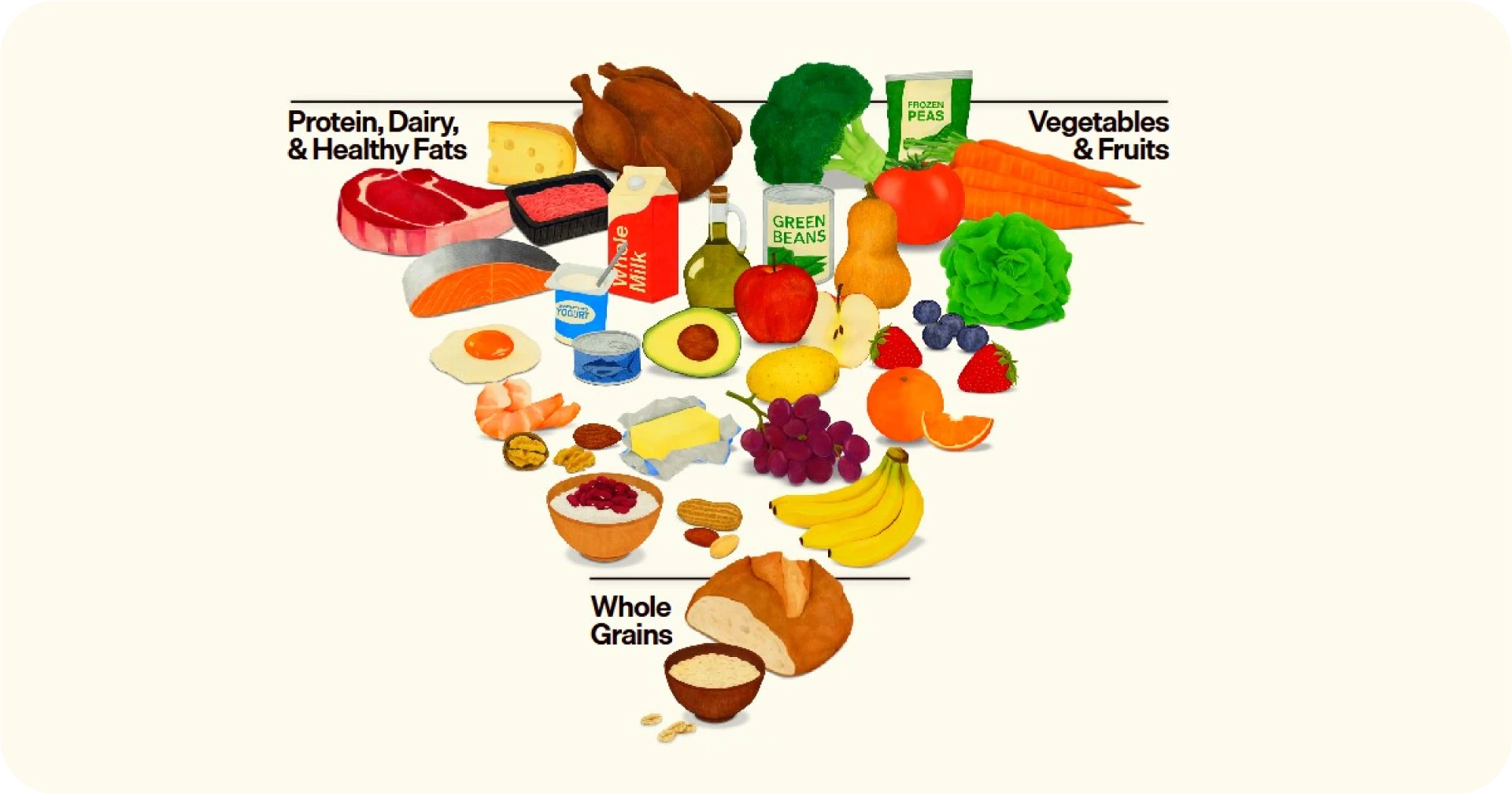
The first thing you’ll notice about the new food pyramid is that the priorities are flipped. Where past versions emphasized grains and minimized meat, the new design puts protein first, and places whole grains (and only whole grains) as the smallest portion of your diet. Healthy fats also take center stage, whereas they were previously confined to the pyramid’s smallest section. Sugar? It’s nowhere to be found.
Along with its new look, the USDA frames the recommendations as a return to “real food”, hosting the guidelines at RealFood.gov. On the whole, it encourages a shift away from processed foods and back to whole foods: the kinds you recognize the names of. But while that advice has been well received, the same can’t be said for everything found in the different sections of the pyramid.

The first section the USDA introduces people to is protein. “Every meal must prioritize high-quality, nutrient-dense protein from both animal and plant sources.” The site also provides specific daily protein guidelines, suggesting 0.55–0.73 grams per pound of body weight (1.2–1.6 g/kg).
Overall, these new recommendations are right on the money. 0.55–0.73 grams per pound of body weight is the optimal amount for an active individual—but as with all guidelines, that doesn’t mean it’s the optimal amount for every person. To find that amount, you’ll have to dig a little deeper into your unique demographics, health, and lifestyle.
A report from UCLA suggests that some people may need more protein than those recommendations—particularly adults over 65 who tend to lose muscle mass, or those with chronic health conditions. People with kidney disease, on the other hand, may need to consume less than the standard recommendation. Avid exercisers often require the most protein, ranging from 1.4 to 2 g/kg of body weight.
So in the end, we can say that the USDA’s guidelines provide a solid starting point. But if you’re interested in really dialing in your protein intake, it’s best to consult with a nutritionist to determine what your personal protein needs really are.
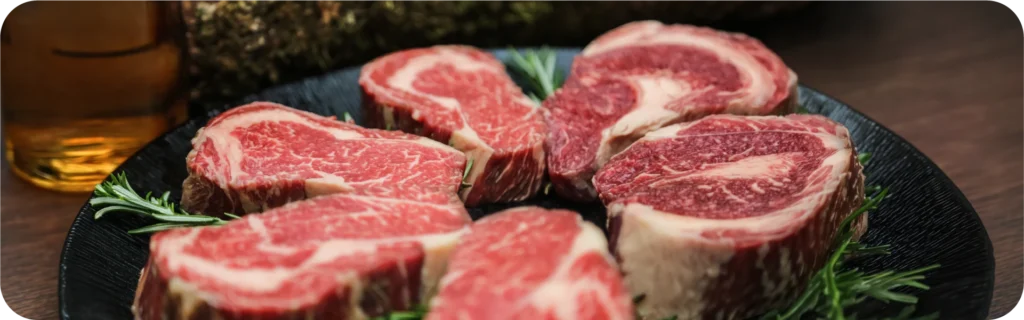
One of the most striking features of this protein section of the pyramid is the bright red steak at the top. After decades of advice to limit red meat, the USDA seems to be reversing course—but not everyone across the scientific community is on board.
Christopher Gardner, a Stanford University nutrition expert and former member of the Dietary Guidelines Advisory Committee, notes that the updates “Go against decades and decades of evidence and research.” What it does follow, however, is an increase in interest in rehabbing the image of red meat.
With the rise in popularity of diets like Carnivore, and wellness influencers extolling the virtues of grass fed beef, it can be tempting to take this shift in the food pyramid as a green flag to put steak on your plate at most meals. But before you do, it’s worth remembering that a new pyramid doesn’t erase years of research.
For example, the American Cancer Society states: “Eating red and processed meat is linked to a higher risk of colorectal cancer…[and] may also increase the risk of breast, pancreatic, prostate, and stomach cancer.” Recent studies also indicate increased risks for total mortality and cardiovascular disease. One 2023 study even showed these risks are similar for both unprocessed and processed red meat, which is classified as a carcinogen by the World Health Organization.
Ultimately, dietary guidance evolves with research, and it’s possible new research will vindicate your steaks after all. As with all dietary decisions, it also depends on your health and lifestyle. So next time you see your nutritionist at True Health, bring up the red meat question for a more personally tailored advice. And in the meantime, remember that there’s virtually no downside to limiting red meat, if you want to be cautious.
There’s a lot to unpack in this latest pyramid update, and more than we can get to in one article. We’ll be back next month with the second article in this series covering the recommendations on fruit, vegetables, and—maybe most striking of all—grains.
Until then, if you have any questions about these updated guidelines and what they mean for you, reach out to our in-house Registered Dietitian Nutritionist, Jessica Kruzan. She can help to answer your questions and set up an appointment to provide personalized nutrition advice and strategies to help you eat for optimal health and reach your goals.
Osvaldo Nuñez
Get insights, recipes, and tips for a healthier life delivered right to your inbox.
Get insights, recipes, and tips for a healthier life delivered right to your inbox.
Health insights are coming your way. Check your inbox.